Breaking the Stonewalling Pattern in Your Relationship
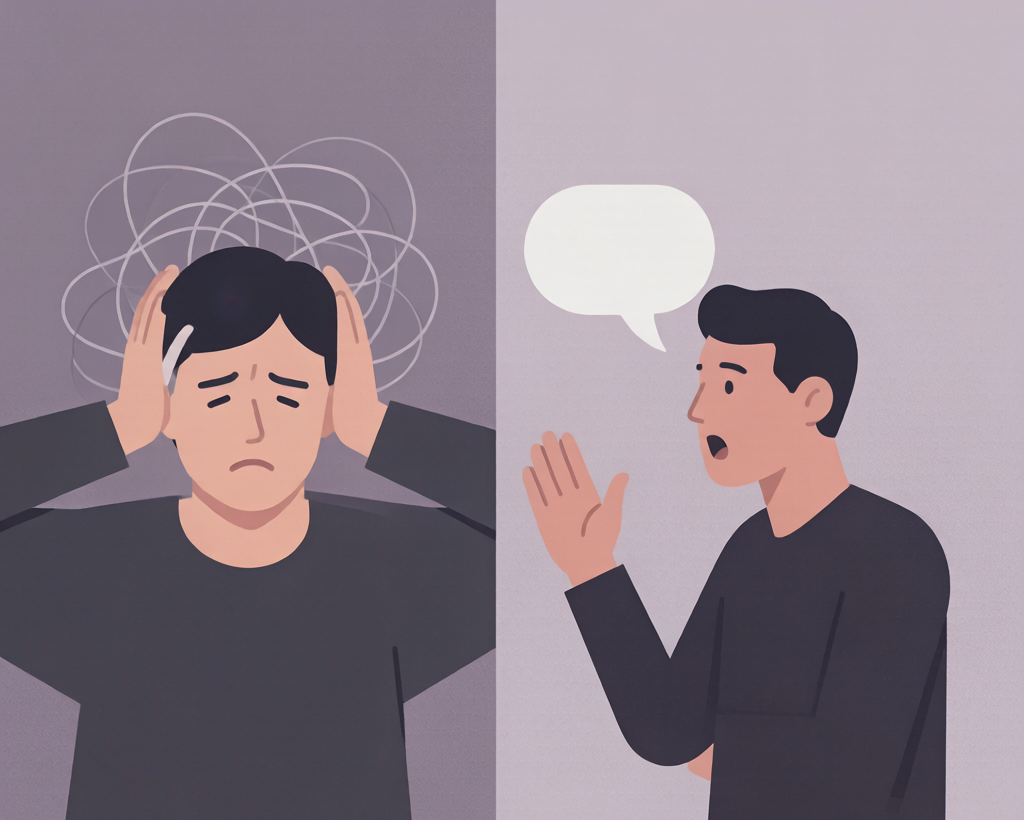
It starts innocently enough. Your partner is upset about something, and you try to help. They push back. You get frustrated. They get more upset. And then, suddenly, they go quiet.
Not the comfortable silence of two people who don't need to fill every moment with words. This silence is different. It's heavy. It's closed. It's the sound of someone pulling the drawbridge up.
This is stonewalling. And if it's become a pattern in your relationship, it can slowly erode the connection you share.
What Stonewalling Actually Is
Dr. John Gottman, after studying thousands of couples, identified stonewalling as one of the "Four Horsemen of the Apocalypse" — the four behaviors most predictive of relationship failure.
Stonewalling is when one partner physically or emotionally withdraws from the interaction. They stop engaging. They might literally leave the room, or they might stay but become unresponsive — no eye contact, no reaction, a wall of silence.

The person doing the stonewalling often experiences it as self-protection. They're overwhelmed. They can't process any more input. They need space. And from their perspective, leaving or going silent is the healthy choice — better than exploding, right?
But to the partner on the other side, stonewalling feels like abandonment. Like rejection. Like being punished for having feelings.
Why Stonewalling Feels Like the Only Option
Before we can fix stonewalling, we need to understand why it happens. Spoiler: it's almost never about not caring.
Most stonewalling comes from one of these places:
Overwhelm
Some people have lower thresholds for emotional intensity. When arguments get heated, their nervous system goes into overload. Stonewalling is an attempt to regulate — to lower the stimulation by removing themselves from the equation.
This is called "flooding" in Gottman's research. It's a physiological state where the body literally cannot process more conflict. Heart rate spikes. Cortisol floods the system. The person needs to get away, not because they don't love their partner, but because their body is in crisis mode.
Learned Behavior
If you grew up in a household where conflict was dangerous — where anger led to yelling, or worse — you may have learned that silence is safety. Stonewalling might be the only way you know to survive an argument without making things worse.

Despair
Sometimes stonewalling comes from a place of giving up. "Nothing I say matters anyway." "We're just going to have the same argument again." When someone believes the conversation can't go anywhere, they stop trying.
This is the most concerning form of stonewalling, because it signals that the relationship is in real trouble.
Why Stonewalling Damages Relationships
Here's what the stonewaller often doesn't realize: their silence is still communication. And what it communicates is devastating.
To the partner being stonewalled, the message is: "I refuse to engage with you." "You are not worth my time or energy." "Your feelings don't matter enough for me to work through this."
Even if none of that is true — even if the stonewaller loves their partner desperately and is just overwhelmed — the impact is the same. The stonewalled partner feels abandoned, dismissed, and increasingly alone.
And the cycle accelerates. The stonewalled partner tries harder to get a response. They ask more questions, louder. They get frustrated. The stonewaller interprets this as confirmation that engagement is dangerous. They stonewall harder. The partner escalates more. Classic pursuer-distancer dynamic.
How to Stop Stonewalling
The solution isn't simple — but it is possible. Both partners have a role to play.
For the Stonewaller: The 20-Minute Rule
If you need to withdraw, that's okay — but do it intentionally. Tell your partner: "I'm feeling overwhelmed and I need to take 20 minutes to calm down. Let's come back to this."
The key is the承诺. You're not abandoning the conversation; you're pausing it. And you have to come back.

Use those 20 minutes to actually calm down. Go for a walk. Do some deep breathing. Listen to music. Exercise if you can. The goal is to get your nervous system out of crisis mode so you can re-engage.
If 20 minutes isn't enough, that's okay — but communicate that. Don't just disappear for an hour and expect your partner to be fine with it.
For the Stonewaller: Build Your Tolerance
Long-term, work on building your capacity to stay in difficult conversations. This isn't about tolerating abuse — it's about building your emotional muscles.
Practice grounding techniques. Learn to notice when you're starting to flood and use self-soothing strategies before you hit the wall. Breathe from your belly, not your chest. Drop your shoulders.软化你的面部 muscles.
Over time, your threshold for conflict will increase. You'll be able to stay present longer before needing a break.
For the Stonewalled Partner: Stop Chasing
This is counterintuitive but crucial. When your partner stonewalls, the worst thing you can do is chase them — asking questions, demanding responses, following them around.
It feels like you're trying to fix things. But from your partner's perspective, it's more flooding. More pressure. More reason to stay withdrawn.

Instead, give them space. Not with anger or martyrdom ("Fine, I'll just leave you alone then!"). But with genuine calm. "I can see you need some time. I'll be in the living room when you're ready."
This gives them the break they need while signaling that you're not going anywhere. You're not abandoning the conversation; you're respecting their boundary while staying available.
For Both: Create a Signal System
Some couples find it helpful to create a non-verbal signal that means "I need a break, but I promise we'll come back to this."
This could be raising a hand, a specific phrase, or even a gesture. The signal serves two purposes: it gives the stonewaller a sanctioned way to pause, and it reassures the stonewalled partner that the conversation isn't over.
The Deeper Work
Beyond these immediate strategies, consider what needs to change at a deeper level.
Are you having the same arguments over and over? What's underneath the surface conflict? If you can identify and address the real issue, there will be less to argue about — and less need to stonewall.
Are you fighting to win or fighting to understand? Most arguments can't be won. They're not competitions. They're attempts at connection that have gone sideways. If you can shift your goal from winning to understanding, the need for stonewalling decreases.
And if stonewalling is deeply ingrained in your patterns — if it feels impossible to change — consider couples therapy. A skilled therapist can help you understand why this pattern exists and give you tools to build new ones.
The Bottom Line
Stonewalling is a coping mechanism, not a character flaw. The person doing it isn't trying to hurt you — they're trying to survive. But survival strategies that damage the relationship need to be upgraded.
The goal isn't to never need a break from difficult conversations. It's to take breaks intentionally, communicate about them honestly, and always come back.
Because the alternative — endless silence, growing distance, a relationship that slowly dies from neglect — is far worse than any argument.
If stonewalling has become a major pattern in your relationship, try using our Couple Peacemaker tool. The structured format gives both partners space to share without the pressure of real-time interaction, which can be especially helpful for couples where one partner tends to shut down.
Note: This article is for educational purposes only. If you're experiencing persistent communication problems in your relationship, consider consulting a licensed couples therapist.
Share this article